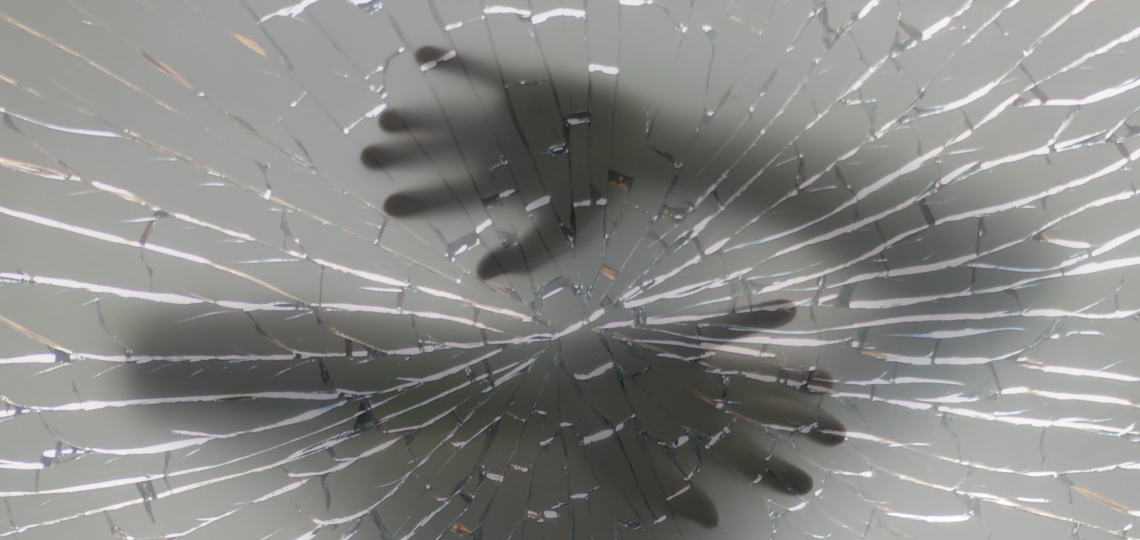
The Quiet Grief of Missing Life While Trying to Protect It
There is a kind of anxiety that doesn’t always look like panic.
It doesn’t always arrive as racing thoughts, visible distress, or overwhelming fear.
Sometimes it looks like silence.
Like endlessly scrolling.
Like emotional distance.
Like being physically present but internally somewhere else.
You are in the room, but not fully in the moment. You hear the conversation but struggle to absorb it. You love the people around you, yet feel separated from them by something invisible.
Many people experience this and assume they are distracted, disconnected, or somehow failing at life. In reality, this state often emerges from a nervous system that has spent years trying to protect itself.
And protection, when carried too far, can quietly become absence.
The hidden bargain fear makes
Fear is not the enemy.
At its core, fear is protective. It exists to keep us safe from harm, pain, rejection, and loss.
The problem begins when the mind starts treating possibility as certainty.
What if something goes wrong?
What if I lose someone I love?
What if I can’t cope?
What if I’m not enough?
Over time, these questions train the nervous system to stay on alert. Rather than waiting for danger to appear, it begins living as though danger is already present.
A familiar pattern develops:
Uncertainty → Threat interpretation → Anxiety → Control or avoidance → Temporary relief → Increased vigilance
The cycle works in the short term. Worrying feels productive. Planning feels protective. Staying alert creates a sense of control.
But every strategy has a cost.
The cost of this one is presence.
When protection becomes disconnection
A nervous system cannot remain in a state of heightened alert forever.
Eventually it adapts.
For some people, that adaptation looks like hypervigilance. For others, it becomes something quieter: emotional distance, numbness, distraction, and detachment.
The mind begins stepping away from life in order to manage the intensity of living it.
This can look like:
- Emotional flattening
- Difficulty connecting with others
- Constant distraction or scrolling
- Feeling disconnected from your own experience
- Moving through life on autopilot
This isn’t laziness, indifference, or a lack of gratitude.
It is a protective response.
If fear says, stay alert, disconnection says, step back.
Both are attempts to reduce discomfort.
Both are trying to keep you safe.
The fear hidden inside love
One of the deepest roots of this pattern is often found in our capacity to love.
When we love deeply, we become aware of something unavoidable:
Everything is temporary.
People change. Relationships evolve. Loss is part of being human.
For a fearful nervous system, this creates an impossible dilemma:
If I love fully, I may lose fully.
So an unconscious compromise is made:
Love, but not too deeply.
Feel, but not too much.
Stay connected, but keep some distance.
What begins as self-protection slowly becomes self-separation.
And this is where the hidden grief emerges.
In trying to avoid future pain, we begin carrying it early.
We rehearse loss before it arrives.
We pre-live grief in an attempt to prepare for it.
The result is a painful paradox:
While trying to avoid losing what matters, we start missing it while it is still here.
Disconnection is not the absence of love
One of the biggest misunderstandings about emotional numbness is the belief that it means someone doesn’t care.
More often, the opposite is true.
Disconnection frequently occurs because we care so deeply that the nervous system learns to protect itself from the vulnerability that caring requires.
Love becomes tangled with fear.
Closeness feels risky.
Presence feels exposed.
And so the system settles for partial participation.
Enough connection to stay attached.
Enough distance to feel protected.
Yet protection comes at a price.
Because while distance may reduce vulnerability, it also reduces intimacy, joy, aliveness, and connection.
Life becomes safer.
But it also becomes smaller.
The illusion of control
Beneath many fear-based patterns lies a simple belief:
If I stay alert enough, I can prevent bad things from happening.
It is an understandable belief. It is also an impossible task.
No amount of vigilance can eliminate uncertainty.
No amount of overthinking can prevent change.
No amount of emotional withdrawal can stop loss from being part of life.
Yet the mind keeps trying.
It rehearses conversations.
Plans for every outcome.
Analyzes every possibility.
Withdraws before it can be hurt.
Not because these strategies work, but because they create the feeling of control.
Meanwhile, life continues moving forward.
And often the greatest loss is not what eventually happens.
It is the moments we never fully entered while trying to prepare for it.
The moment of recognition
For many people, healing begins with a simple but uncomfortable realization:
I am protecting myself from pain, but I am also protecting myself from life.
Not intentionally.
Not consciously.
But through thousands of small moments of absence.
Moments spent worrying instead of experiencing.
Preparing instead of participating.
Observing instead of inhabiting.
This awareness is not failure.
It is the beginning of reconnection.
Returning to life
Reconnection is rarely dramatic.
It is not a permanent state of presence or a complete disappearance of fear.
It is something much smaller.
Much gentler.
It is noticing when you’ve drifted away and returning.
It is staying with a feeling for a few extra seconds instead of escaping it.
It is looking into someone’s eyes instead of into a screen.
It is remembering that this moment is happening now, not in the imagined future.
The goal is not perfect presence.
The goal is repeated return.
Because a nervous system shaped by fear doesn’t learn safety through force.
It learns through experience.
Through discovering, again and again:
I can feel without being overwhelmed.
I can love without rehearsing loss.
I can be present without controlling everything.
The truth at the centre
At the heart of this entire experience is a quiet realization:
Trying to avoid loss can create a life that feels like loss.
Not dramatic loss.
But the loss of connection.
The loss of presence.
The loss of moments that can never be recovered.
Fear promises protection, but when it becomes the organising principle of our lives, it often leaves us standing at a distance from the very things we are trying to protect.
Healing is not about eliminating fear.
It is about rebuilding trust that presence is worth the risk.
Because uncertainty will always exist.
Love will always carry the possibility of loss.
And life will never come with guarantees.
But life only happens in the moments we are willing to enter fully.
Not perfectly.
Not fearlessly.
Just presently.
Again and again.
And perhaps that is the real invitation:
To stop rehearsing life and start participating in it.
Even with fear.
Even with uncertainty.
Even knowing that nothing lasts forever.
Because the alternative, missing life while trying to protect it, becomes its own kind of grief.